


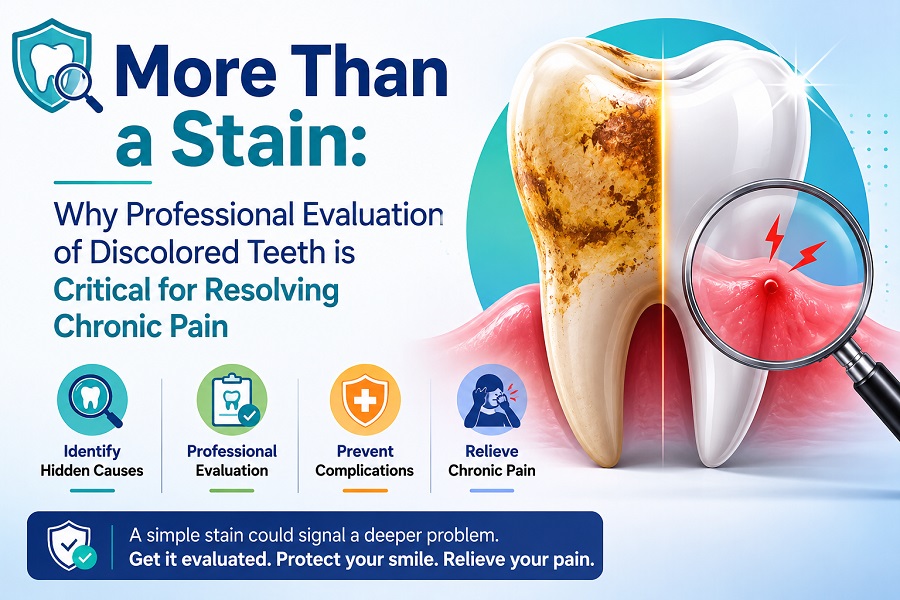
In the world of modern dentistry, the appearance of our smiles is often equated with our overall health. However, a common misconception persists: that the color of a tooth is purely an aesthetic concern. While many people seek over-the-counter whitening solutions for discolored teeth, they often overlook a more urgent clinical reality. When a change in tooth color is accompanied by tooth pain, the issue is rarely a simple surface stain.
Instead, this combination of symptoms typically signals a deep-seated pathological process involving the living tissue of the tooth. Understanding why professional evaluation is mandatory in these cases is the only way to resolve chronic pain and prevent the eventual loss of the tooth.
Understanding the Spectrum of Discoloration
Not all discoloration is created equal. To determine the cause of the associated pain, clinicians first categorize the type of staining present.
1. Extrinsic Staining (Surface Level)
Extrinsic stains are caused by external factors such as coffee, tea, red wine, or tobacco. These stains sit on the outer layer of the enamel. While they can make the teeth look yellow or brown, they are rarely associated with pain. If pain is present with extrinsic stains, it is usually due to a separate issue, such as gum recession or a cavity.
2. Intrinsic Staining (Internal Level)
Intrinsic staining occurs when the inner structure of the tooth, the dentin, darkens or develops a yellow, gray, or even pinkish tint. This type of discoloration is often a “red flag” for internal damage. When discolored teeth of this nature are paired with tooth pain, it strongly suggests that the dental pulp—the nerve and blood supply—is under significant distress.
The Intersection of Color and Pain
When a single tooth begins to change color—moving from white to a dark gray or a dull yellow—and is accompanied by discomfort, it is a signal of a “non-vital” or dying tooth.
The “Bruised” Tooth: Pulpal Hemorrhage
If a tooth suffers trauma (such as a sports injury or a fall), the tiny blood vessels inside the pulp can rupture. This is essentially a “bruise” inside the tooth.
-
The Color: The iron in the blood breaks down and leaches into the microscopic tubules of the dentin, turning the tooth dark gray or black.
-
The Pain: The initial trauma causes acute pain, but the subsequent inflammation (pulpitis) can lead to a chronic, throbbing ache as the tissue struggles to heal within the rigid confines of the tooth.
The Infection Pathway: Deep Decay
When a cavity is left untreated, bacteria eventually reach the pulp chamber.
-
The Color: As the bacteria consume the living tissue, the necrotic (dead) debris turns the tooth a dark, muddy color.
-
The Pain: This is often the stage where patients experience severe tooth pain. The bacteria produce gases and pus, creating immense pressure at the root tip. This pressure results in a localized abscess, making the tooth extremely sensitive to touch or temperature.
Why Whitening is Not the Answer
The danger of self-treating discolored teeth with whitening strips or gels is that these products are designed for healthy enamel.
-
Masking the Symptom: Whitening might temporarily lighten a dark tooth, but it does nothing to address the underlying infection. While you are focused on the color, the bacteria are continuing to destroy the bone surrounding the tooth root.
-
Exacerbating the Pain: Whitening chemicals are highly acidic. If they enter a tooth that is already compromised by a fracture or deep decay, they can travel directly to the inflamed nerve, causing excruciating and immediate pain.
The Role of Professional Evaluation
A professional dental examination is the only way to diagnose the specific pathology behind the pain. This evaluation typically includes:
-
Diagnostic Imaging (X-rays): To see what is happening beneath the surface, specifically looking for bone loss or abscesses at the root tip.
-
Vitality Testing: Using thermal or electrical stimuli to determine if the nerve inside the tooth is still alive.
-
Percussion Testing: Tapping on the tooth to see if the surrounding ligaments are inflamed.
Restorative Solutions
Once the cause is identified, the goal is to resolve the tooth pain and stabilize the tooth.
-
Root Canal Therapy: This is the gold standard for treating a necrotic or infected tooth. The dentist removes the dead tissue, disinfects the canals, and seals the tooth. Once the infection is gone, the pain subsides.
-
Internal Bleeding: If the tooth remains dark after a root canal, a dentist can perform “internal bleaching,” placing a whitening agent inside the tooth to restore its natural color from the inside out.
Adjunctive Care: Maintaining a Healthy Environment
While professional treatment fixes the internal problem, maintaining the health of the surrounding gums and enamel is vital for long-term success.
Using an antimicrobial mouthwash is a key part of the recovery and maintenance phase.
-
Pre-Procedure: Rinsing helps lower the overall bacterial count in the mouth, reducing the risk of spreading the infection during treatment.
-
Post-Procedure: A therapeutic rinse ensures that the gum tissue around the treated tooth remains healthy and free of plaque, which is especially important if a crown is placed.
-
Symptom Management: Rinsing can help soothe the generalized gum irritation that often accompanies a localized tooth infection.
Conclusion: Listen to the Warning Signs
Your teeth have a unique way of communicating their health status. Discolored teeth are a visual warning, and tooth pain is a physical one. When they occur together, your body is telling you that the internal systems of the tooth are failing.
Do not attempt to mask these symptoms with cosmetic fixes. By seeking a professional evaluation, you can address the root cause of the infection, eliminate chronic pain, and ensure that your smile is healthy from the inside out. A bright smile is a wonderful goal, but a healthy, pain-free smile is an absolute necessity.

