


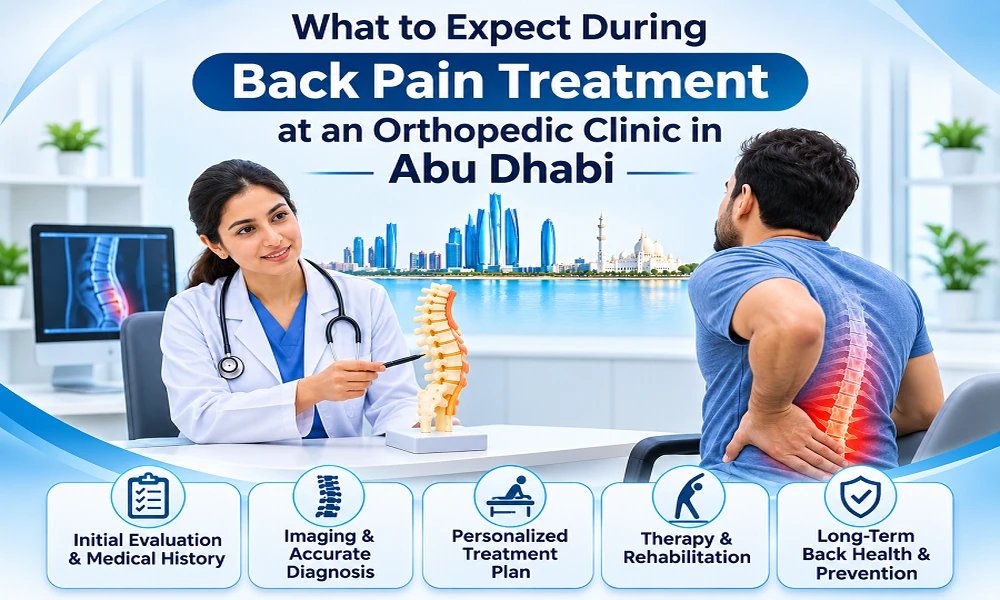
Understanding What to Expect During Back Pain Treatment at an Orthopedic Clinic in Abu Dhabi helps individuals residing in or visiting Reem Island navigate spinal care with confidence. Specialized orthopedic centers offer comprehensive diagnostic evaluations, non-invasive therapeutic options, and structured rehabilitation plans to effectively address discomfort and restore long-term mobility.
Understanding Back Pain and Initial Medical Consultation
Back pain is one of the most common musculoskeletal complaints globally, affecting people across all activity levels and age groups. Whether stemming from sudden athletic exertion, poor posture, repetitive workplace stress, or age-related spinal changes, discomfort in the lumbar or thoracic regions can significantly hinder daily routines. Seeking specialized evaluation allows patients to identify the underlying structural causes rather than merely treating superficial symptoms.
During an initial clinical consultation, specialists conduct thorough assessments to understand the precise nature of the pain. Physicians review patient medical histories, discuss daily physical habits, and perform physical examinations to test range of motion, muscle strength, nerve reflexes, and joint stability. Understanding What to Expect During Back Pain Treatment at an Orthopedic Clinic in Abu Dhabi allows patients to prepare relevant medical records, describe symptom triggers clearly, and actively participate in formulating their treatment path.
Diagnostic Technology and Imaging Procedures
Accurate diagnosis forms the foundation of any effective treatment strategy. Medical facilities utilize advanced diagnostic modalities to pinpoint spinal disc abnormalities, nerve compression, joint inflammation, or soft tissue injuries. Standard X-rays provide clear visual evidence of bone alignment, joint space narrowing, and skeletal degeneration, serving as a primary screening tool during early assessments.
When deeper soft tissue examination is required, magnetic resonance imaging (MRI) or computed tomography (CT) scans offer detailed cross-sectional views of intervertebral discs, spinal cords, and surrounding nerve roots. Diagnostic ultrasound may also be employed to evaluate dynamic soft tissue movements. These advanced diagnostic tools enable medical teams to design highly targeted intervention strategies tailored to individual spinal conditions.
Conservative and Non-Surgical Treatment Options
The majority of spinal conditions respond favorably to conservative, non-surgical management techniques. Orthopedic specialists emphasize conservative care as the first line of defense, aiming to alleviate discomfort, reduce localized inflammation, and improve function without invasive procedures. Medication management may include targeted anti-inflammatory agents, muscle relaxants, or specialized pain-relieving solutions to manage acute flare-ups.
In addition to pharmacological support, interventional pain management techniques such as epidural steroid injections or facet joint blockades can be utilized for targeted relief. These image-guided procedures deliver therapeutic agents directly to inflamed spinal areas, reducing swelling around compressed nerves and creating a painless window during which patients can engage effectively in therapeutic physical exercises.
Physical Rehabilitation and Therapeutic Exercises
Physical therapy serves as a core component of long-term spinal recovery and preventative care. Specialized physical therapists work closely with patients to develop customized exercise regimens that target core muscle strength, hamstrings, hip flexors, and back extensors. Strengthening these supporting muscle groups reduces mechanical load on the spinal column and stabilizes the pelvic structure during daily movement patterns.
Manual therapy, including spinal mobilization, soft tissue release, and dynamic stretching, helps improve joint flexibility and relieve localized muscle tightness. Therapists also educate individuals on posture control, ergonomic workspace setups, and proper lifting mechanics. For residents in Abu Dhabi, participating in structured rehabilitation ensures long-term functional improvement and significantly reduces the likelihood of recurrent back pain episodes.
Advanced Interventions and Surgical Considerations
While conservative strategies effectively address most spinal issues, certain persistent or severe conditions may warrant advanced surgical evaluation. Surgical intervention is typically considered when non-surgical treatments fail to provide relief after several weeks, or when neurological deficits such as progressive leg weakness, numbness, or loss of bowel and bladder control are present.
Modern surgical options emphasize minimally invasive techniques that utilize small incisions and specialized micro-instruments. Procedures such as microdiscectomy, decompression laminectomy, or spinal fusion focus on relieving nerve compression while preserving as much healthy spinal architecture as possible. Minimally invasive approaches generally result in reduced postoperative discomfort, shorter hospital stays, and faster overall recovery times.
Conclusion
Navigating spinal health requires clear information and professional clinical guidance. Knowing What to Expect During Back Pain Treatment at an Orthopedic Clinic in Abu Dhabi empowers patients throughout Reem to make informed healthcare choices. By combining accurate diagnostic evaluations, tailored conservative therapies, and targeted physical rehabilitation, individuals can overcome back discomfort and achieve sustained, active mobility.

